


Blog
What you need to know about physiotherapy and podiatry.

 Our Locations
 Physio&SoleClinic
 Podiatry
  April 10 2026

Written by
Principal Podiatrist at Women And Children Centre and Physio & Sole Clinic
Jia Lin is a senior podiatrist who graduated from La Trobe University, Melbourne, in 2014 with a Bachelor in Health Sciences and a Master of Podiatric Practice. She has a strong interest in children’s foot conditions, developed during her paediatric training in Australia. Jia Lin is passionate about helping patients recover and return to walking comfortably.
Calluses and corns in children are areas of thickened skin that develop due to repeated pressure or friction — commonly from ill-fitting shoes, sports activity, or underlying foot mechanics. A callus is usually broader and less painful, while a corn is smaller, more localised, and can feel tender due to pressure on a specific point.
At Women and Children’s Centre, our podiatrists provide comprehensive assessment and treatment for paediatric corns and calluses. This includes precise skin care (corn removal), footwear evaluation, and biomechanical analysis to address the root cause.
| Session Duration 30–45 minutes | Pain Relief Immediate | What’s Included Assessment, corn/callus care, footwear advice |
| Common Causes Shoe friction, sports, foot pressure points | When to See a Podiatrist If pain affects walking or keeps returning | Clinicians Paediatric Podiatrists |
Calluses and corns are protective skin changes caused by repeated rubbing, pressure, or shearing forces on the feet. A callus is usually flat and spread out. A corn is smaller, more localised, and may feel like a hard central core pressing into the skin.
In children, these thickened areas are often found on the toes, the ball of the foot, the heel, or areas where footwear repeatedly rubs. While adults get them more often, children can also develop them when there is constant friction from school shoes, sports footwear, toe-walking, prominent bones, or foot function that increases pressure in one spot.
A painful “corn” is not always a true corn. Sometimes, what looks like a corn can actually be a wart, foreign body reaction, eczema-related thickening, or another skin condition. That is why diagnosis matters before trying corn removal at home.
The common mechanism is simple: repeated pressure plus repeated friction over time. The skin thickens to protect itself.
Typical causes include:
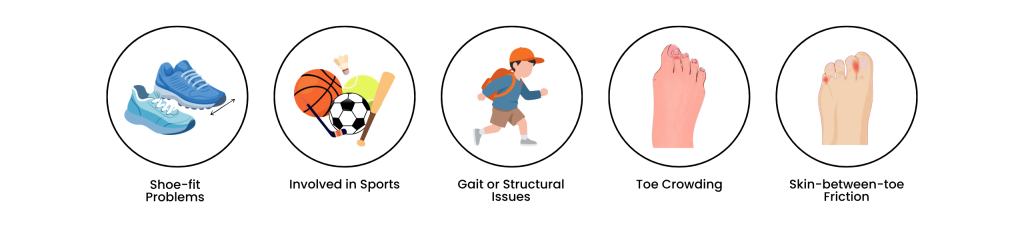
Some children are more at risk than others.
Children with shoe-fit problems
Tight toe boxes, stiff uppers, loose back counters, worn soles, and poorly fastened shoes can all increase friction. Any tight areas over a toe joint can create a painful corn.
Children involved in sports
Running, football, dance, court sports, and repetitive training can increase loading under the forefoot and heel. If the footwear is not properly matched to the child’s foot shape and activity, hard skin can build up faster.
Children with gait or structural issues
Flat feet, high arches, toe-walking, prominent joints, or abnormal foot function can shift pressure repeatedly into the same areas. Podiatrists in Singapore assess children for developmental and biomechanical problems through detailed examination and gait analysis.
Children with toe crowding or skin-between-toe friction
Soft corns can develop between toes when the skin stays moist and pressure builds from adjacent toes or tight shoes.
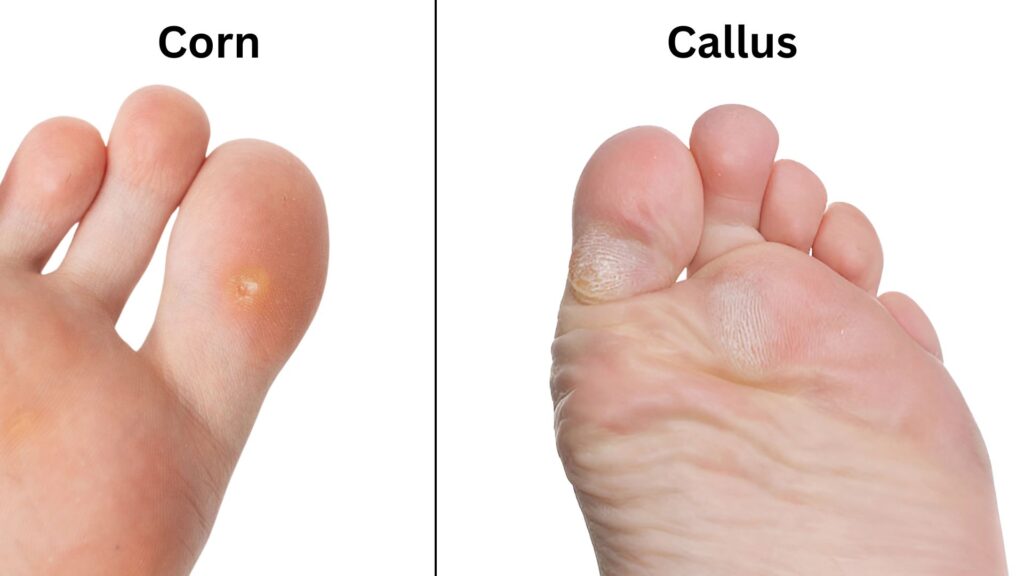
| Corn | Callus |
| A smaller, concentrated plug of hard skin, often painful because it presses inward over a focal pressure point. | A broader, flatter patch of thickened skin caused by repeated pressure or friction. |
This distinction matters because parents often use the terms interchangeably. In practice, both are forms of thickened skin, but a corn tends to hurt more sharply, especially when direct pressure is applied.
Another practical distinction is that a painful lump on a child’s foot is not always a corn. Verrucae, skin trauma, splinters, and other causes can look similar, especially on the sole. If there is uncertainty, repeated over-the-counter corn removal can irritate the skin without fixing the problem.
Home care may be suitable when:
At home, the focus should be on relieving pressure rather than aggressively removing the skin, through better footwear, regular moisturising, and gentle care of the affected area..
Podiatry treatment is usually better when:
For children, clinic treatment is often safer than aggressive self-treatment because paediatric skin can be irritated easily, and misdiagnosis is common. Salicylic acid products marketed for corns may not be appropriate in every case, especially if the diagnosis is wrong or the surrounding skin becomes damaged.
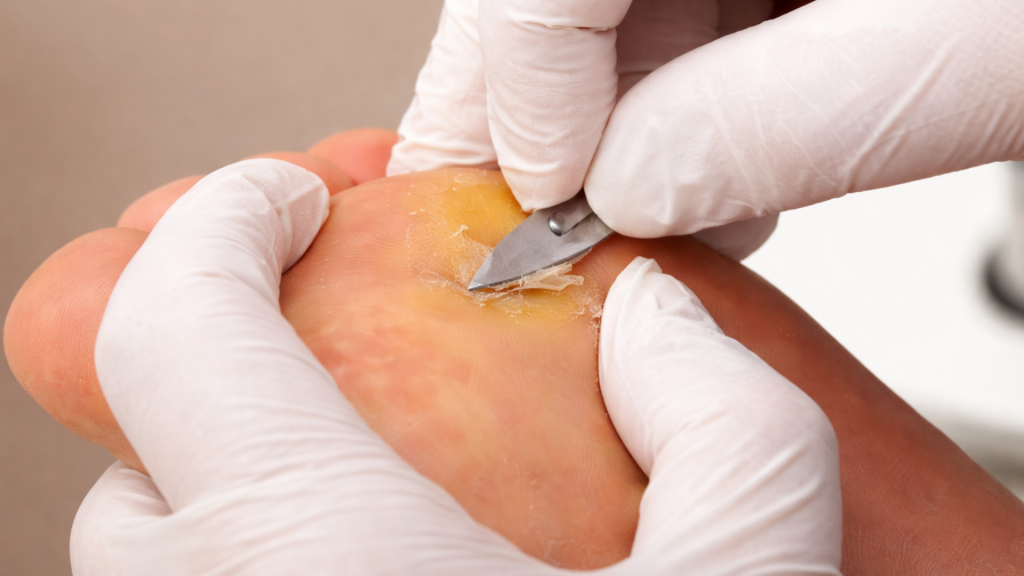
At a podiatry appointment, the goal is not only to remove painful hard skin, but also to work out why it formed.
A typical assessment may include:
At the Women and Children’s Centre, this can be especially valuable because podiatry and physiotherapy can be integrated where needed. If the child’s corn or callus is related to loading, movement pattern, muscle imbalance, or lower-limb mechanics, management can go beyond simple skin care.
Corn removal in a clinic usually means careful reduction of the thickened skin by a trained podiatrist Singapore, combined with pressure-relief strategies and treatment of the underlying cause. It is not just about shaving the skin once.
Treatment commonly includes:
Some children improve quickly after one visit if the issue is mainly shoe-related. Others need a series of consultations when the skin change is longstanding or the underlying cause is biomechanical.
1. Check the child’s symptoms
Ask where it hurts, whether the pain is sharp or dull, and whether it worsens in school shoes or sports shoes. Look for a small central hard spot, a wider patch of rough skin, redness, or rubbing marks.
2. Inspect the footwear
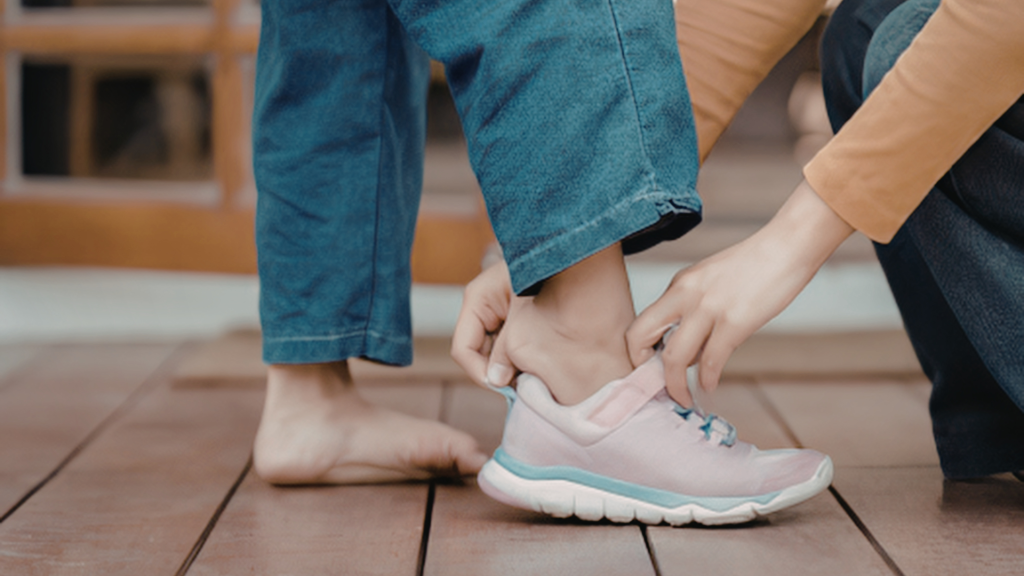
Check toe-box width, sock seams, worn insoles, heel slippage, and whether the child has outgrown the shoe. In children, growth can turn a previously suitable shoe into a pressure source quite quickly.
3. Reduce friction early
Use properly fitted footwear, secure fastenings, and socks that reduce rubbing. Keep the skin moisturised if it is dry and thickened.
4. Avoid digging or cutting the lesion
Do not try to cut out a “core” at home. This can injure the skin and may not address the real diagnosis.
5. Use gentle skin care only
If it appears to be mild callus, a gentle file or pumice and regular moisturiser may help. Avoid over-filing.
6. Monitor function
If your child changes the way they walk, stops participating in sports, complains every day, or develops repeated recurrence, arrange an assessment.
7. Book a podiatry review when needed
A podiatrist can confirm whether it is a corn, callus, wart, or pressure lesion, and identify any biomechanical cause. Women and Children’s Centre also offers an Ask-A-Pod service, where parents can send a photo of a suspected lesion directly to our podiatrist via WhatsApp for initial guidance.
The main risk is not usually severe illness. The bigger problem is persistent pain plus persistent cause.
Delayed or ineffective management can lead to:
In practical terms, repeated recurrence is a strong clue that the skin lesion is a symptom, not the whole problem.
In children, corns and calluses are usually a pressure-and-friction problem first, and a skin problem second. While the thickened skin is what you see, long-term relief comes from identifying and correcting the underlying cause.
For parents in Singapore, early action makes a difference. Simple steps like checking footwear, reducing friction, and avoiding aggressive home corn removal can help — but if the pain persists or keeps coming back, a proper assessment is important. When factors like walking patterns, foot structure, or sports loading are involved, a combined podiatry and physiotherapy approach can significantly improve outcomes and reduce recurrence.
If your child is experiencing a painful or recurring corn or callus, our podiatry team at Women & Children’s Centre can help. We will assess the skin condition, footwear, gait, and lower-limb mechanics to provide a personalised treatment plan focused on both relief and prevention.
Book an appointment today or Ask A Podiatrist to get your child back to moving comfortably and confidently.
Phone: 9126 8257
Fax: 6281 1209
Email: contact@physioandsole.com
Whatsapp a Podiatrist: 87706213