


Not all toddlers walk at the same age—but if your child isn’t walking by 18 months, it’s natural to feel concerned. This guide explains what late walking means, when to take a closer look, and how a pediatric gait assessment can provide clear answers and the right next steps for your child.
If your toddler is nearing 18 months and still not walking, you might be wondering:
“Are they just taking longer?”
“Should I wait?”
“Is something wrong?”
The truth is, children develop at their own pace.
But in some cases, delayed walking can be linked to issues with balance, strength, or foot development.
Understanding the difference is what matters.
What is Considered “Late Walking” for a Toddler?

A toddler is generally considered a late walker if they:
- Are not walking independently by 18 months
- Show limited progress from cruising to stepping
- Appear unstable, frequently falling, or avoiding weight-bearing
Milestone breakdown (12–18 months)
- 12–14 months: Pulling to stand, cruising along furniture
- 14–16 months: Attempting independent steps
- 16–18 months: Walking independently with improving balance
Not all late walkers have a problem.
But when progress stalls or movement looks unusual, it’s worth taking a closer look.
Why Does Delayed Walking Matter?

Many parents are told to “wait and see”. And in some cases, that’s perfectly reasonable.
But in others, waiting too long can lead to:
- Development of compensatory movement patterns
- Ongoing balance or coordination issues
- Increased falls
- Poor posture habits later in childhood
- Missing the window for early, simple intervention
Early assessment isn’t over-reacting, it’s about catching small issues early when they are easiest to fix.
What are the Common Causes of Late Walking?

Late walking can happen for many reasons, most of which are manageable.
Common possibilities include:
- Natural variation in motor development
- Cautious temperament
- Low muscle tone
- Reduced core or leg strength
- Tight calf muscles or limited ankle range
- Flat feet or poor foot stability
- Asymmetry between the two sides
- Neurological or neuromuscular conditions
- Broader developmental delay
Some children may also show unusual walking patterns, such as feet turning inward (called pigeon-toed walking) or outward.
Mild variations are common and often improve with growth.
However, if the pattern is pronounced or affects balance, it may indicate underlying alignment or stability issues.
When Should Parents be Concerned?
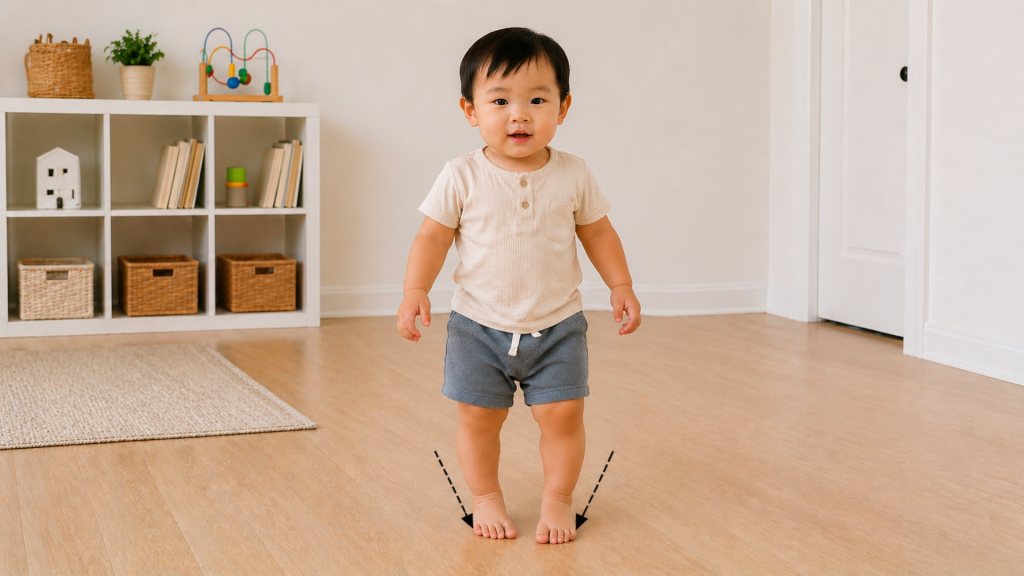
While every child develops differently, there are a few signs that should not be overlooked.
You may want to consider a paediatric gait assessment if your child:
- Is not walking independently by 18 months
- Shows little improvement over time
- Falls frequently or seems unsteady
- Avoids standing or putting weight on their legs
You might also notice walking patterns like pigeon-toed walking. While often harmless, it’s worth assessing if it’s pronounced, worsening, or affecting balance.
This is where a paediatric gait assessment can help provide clearer answers.
What is Paediatric Gait Assessment for Late Walkers?
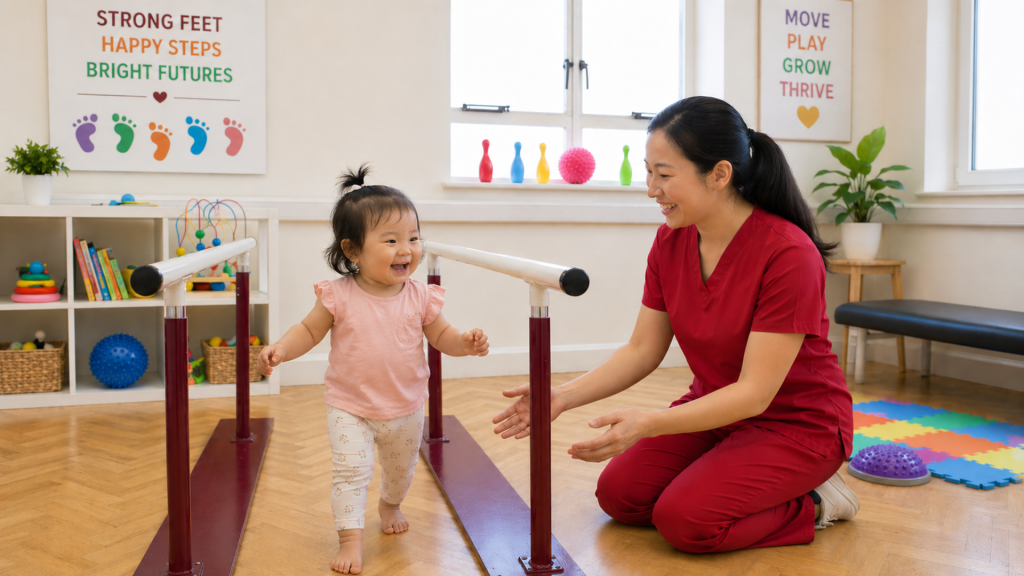
Paediatric gait assessment for late walkers is a structured clinical evaluation used to understand why a toddler (typically aged 12–18 months) is not yet walking independently or is walking with an unusual pattern.
It assesses:
- Developmental milestones
- Muscle strength and joint flexibility
- Balance and coordination
- Foot posture and lower limb alignment
The goal is to determine whether the delay is within normal variation or requires support from a paediatric podiatrist or physiotherapist.
How Can a Paediatric Gait Assessment Help a Late Walker?
A paediatric gait assessment helps identify the root cause of delayed walking and provides a clear, structured plan to support your child’s development.
What parents gain from an assessment:
- Clarity: Understand what’s happening and why
- Reassurance: Know what is normal and what to look out for
- Direction: Clear next steps instead of guesswork
- Prevention: Address small issues early
For many parents, the biggest benefit is simply knowing what to do next.
What Happens During a Paediatric Gait Assessment?

Most parents are surprised at how simple and interactive the assessment is at Physio & Sole Clinic.
Rather than putting your child through tests, we observe how they naturally move:
- Pulling up to stand or cruising along furniture
- Attempting steps and maintaining balance
- Recovering from small wobbles or falls
We will also take a closer look at:
- Muscle strength and joint mobility
- Foot posture and leg alignment
- Your child’s milestone history and daily habits
From there, we explain what’s happening and guide you on the next steps – whether that’s simple exercises, footwear tweaks, or just monitoring progress.
The goal is to give you clarity and confidence in what your child needs next.
Combined Physiotherapy and Podiatry Approach Matters
At Physio and Sole Clinic, your child’s gait assessment is supported by both a paediatric physiotherapist and a podiatrist.
While our physiotherapists focus on how your child moves, such as strength, balance, and coordination, our podiatrists assess how the feet and lower limbs are aligned and support that movement.
This combined approach ensures that your child’s walking is not looked at in isolation, but as part of a bigger picture.
For your child, this means:
- A well-rounded assessment of both movement and foot mechanics
- Precise recommendations tailored to their specific needs
- A coordinated plan that supports both development and alignment
By bringing both perspectives together early, we are better able to guide your child towards stable and confident walking without overlooking important factors along the way.
Should I Wait or Get a Gait Assessment?
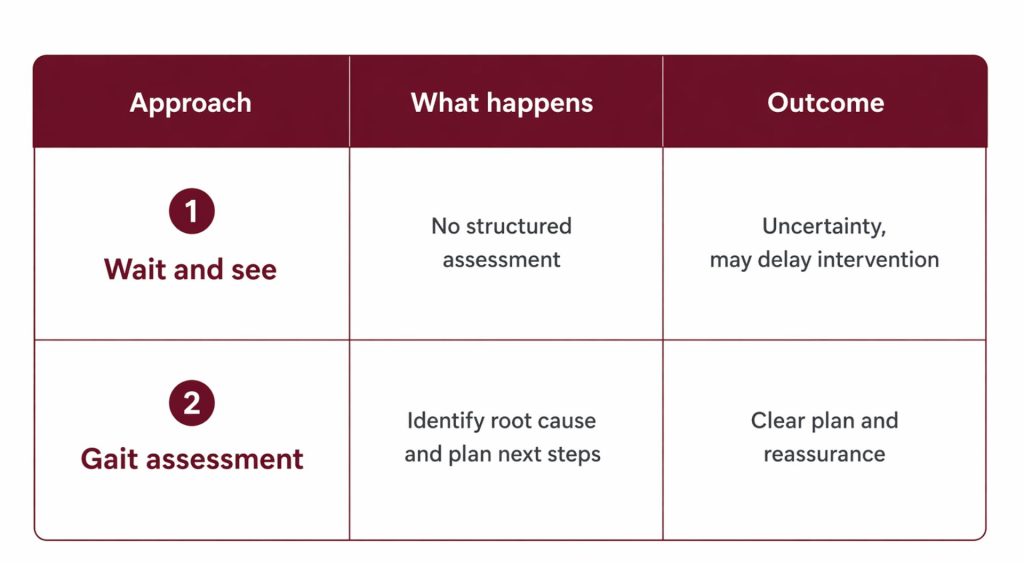
Without a structured assessment, it can be difficult to understand what is causing the delay in your child’s walking or whether your child needs support.
A paediatric gait assessment helps identify the root cause and provides a clear plan forward, giving you both clarity and reassurance on what to do next.
It’s Okay to Check Early

If your toddler is approaching 18 months, walking very late, or showing an unusual walking pattern, getting a professional assessment can give you peace of mind.
At Physio & Sole Clinic, our team combines physiotherapy and podiatry expertise to assess movement, foot alignment, and development, helping your child take confident steps forward.
Understanding the cause early allows for the right support at the right time.
Resources from Physio & Sole Clinic
This article is part of Physio & Sole Clinic’s Podiatry & Rehabilitation Resource Series, created to help patients better understand their treatment options and make informed decisions about their recovery journey.
You may also find these related resources helpful:
Podiatry in Singapore: What It Is, What It Treats, and Which Type Is Right for YouUnderstand what a podiatrist does, the conditions they treat, and when it’s time to seek professional care for persistent foot issues.
Physio & Sole Clinic Locations GuideFind a Physio & Sole Clinic near you across Singapore for convenient access to physiotherapy care.
Pigeon Toe in Children: Causes, Genetics, Walking Patterns, and Treatment Options for Parents in Singapore Learn about what pigeon toe (in-toeing) is, its common causes in children, when it’s normal, and when to seek professional assessment and treatment.
Understanding Your Child’s Walking Pattern: A Guide to Gait Assessment in Singapore
A guide for parents to learn about their children’s walking patterns and how gait assessments help identify walking issues in children.
Ready to feel better?
Book a consultation with our physiotherapy team for an assessment tailored to you.