
Osgood-Schlatter disease is a common cause of knee pain in growing, sporty children. Here's how to spot it, and what actually helps it heal.
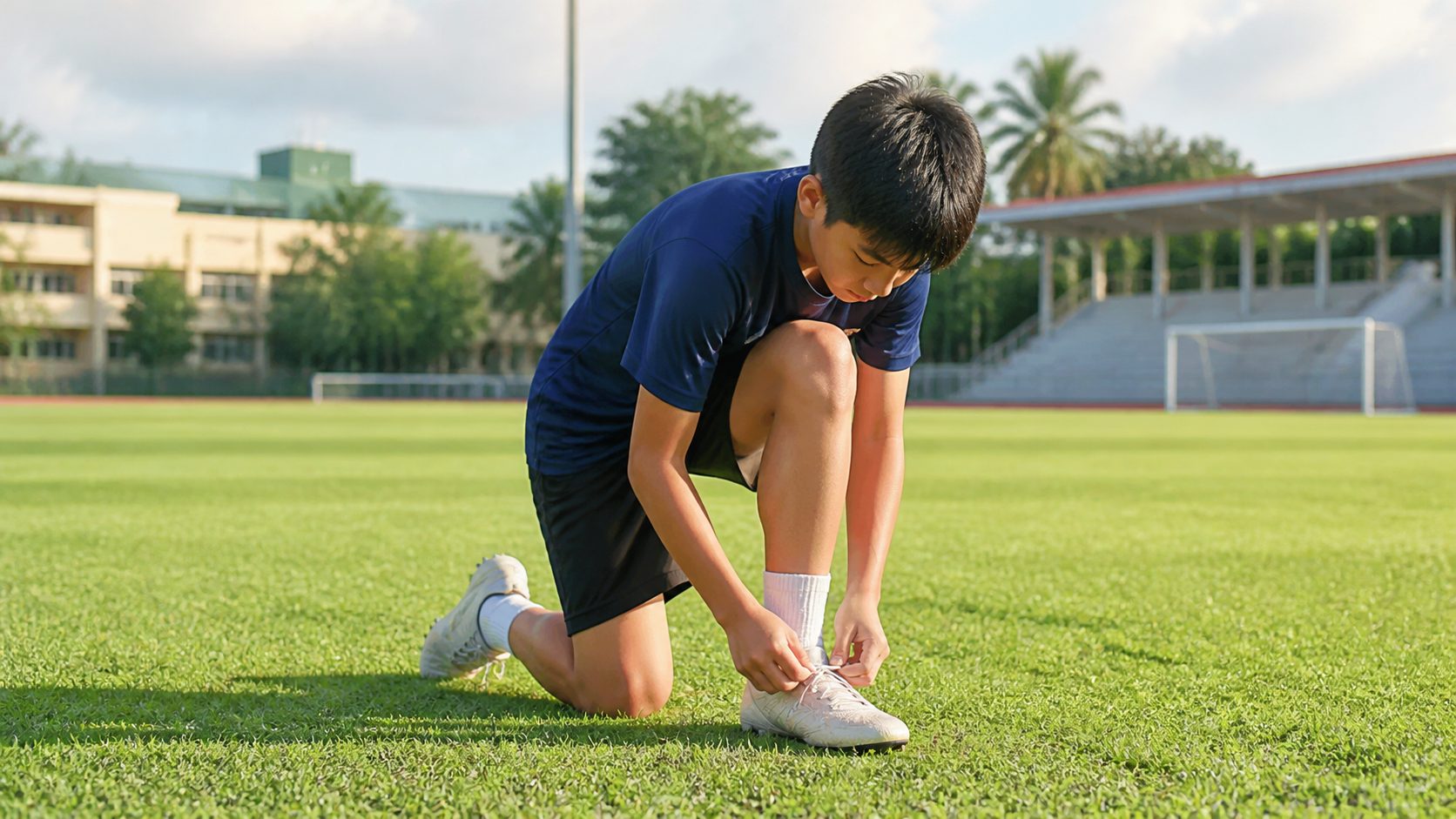
Your child comes off the pitch limping, points to a sore, slightly swollen bump just below the kneecap, and says it's been nagging for weeks, worse after football training, better on rest days. It's tempting to file this under "growing pains" and hope it goes away. Most of the time, this is Osgood-Schlatter disease, it is not dangerous, and there's a clear, well-established way to manage it, but "it'll pass on its own" and "ignore it and keep playing" are two different pieces of advice, and only one of them is right.
Osgood-Schlatter or Something Else? How to Tell
The single clearest sign is location: pain and a tender, sometimes visibly prominent bump right at the top of the shinbone, just below the kneecap, that flares with running, jumping or kicking and eases with rest. It's easy to confuse growth-related pain in general, and it's worth knowing how Osgood-Schlatter compares to Sever's disease, the other common "growth plate under strain" condition in active kids, which we've covered separately because the two get mixed up often.
| Osgood-Schlatter disease | Sever's disease | |
|---|---|---|
| Where it hurts | Below the kneecap, at the shinbone | The back of the heel |
| Typical age | Roughly 9–15, most often early-to-mid teens | Roughly 8–14 |
| What's actually happening | The thigh muscles pull on the growth plate at the shin via the patellar tendon | The calf muscles pull on the growth plate at the heel via the Achilles tendon |
| What makes it worse | Running, jumping, kicking, kneeling | Running and jumping, especially on hard surfaces |
Both are traction apophysitis, irritation where a tendon repeatedly pulls on a growth plate, and both share the same basic logic: they're not damage to worry about long-term, but they do need the activity load managed while they settle, not pushed through.
What Actually Causes It?
It comes down to timing: growth spurts make bone lengthen faster than the muscles and tendons around it can comfortably keep up, and repetitive sport then adds the strain that tips that mismatch into pain. During a growth spurt, the quadriceps muscles at the front of the thigh pull, via the patellar tendon, on a bony attachment point at the top of the shinbone called the tibial tuberosity. In a growing child, that attachment point is still soft growth-plate cartilage, not solid bone, and repeated pulling from running, jumping and kicking irritates it.
It shows up most in children playing sports that involve exactly those movements: football, basketball, running and track, volleyball, which in Singapore's school context often means a child deep in National School Games training when symptoms start. That's not a coincidence: more training load during a growth spurt is precisely the combination that causes this.
- Pain and tenderness right below the kneecap, sometimes with visible swelling or a prominent bump
- Worse with running, jumping, kicking, or kneeling directly on the area
- Eases with rest, often flares again once training resumes
- Can affect one knee or both
What Does Physiotherapy Actually Do About It?
This is genuinely first-line treatment, not a supplementary add-on: the standard approach is managing training load, stretching the tight structures pulling on the growth plate, and progressively strengthening the muscles around the knee, and it works. A published case report on conservative management describes exactly this combination, kinesiotherapy (structured therapeutic exercise) and static stretching, as effective, with return to sport achieved within two months of starting therapy, and manual therapy of the quadriceps producing the most noticeable pain relief in that case.
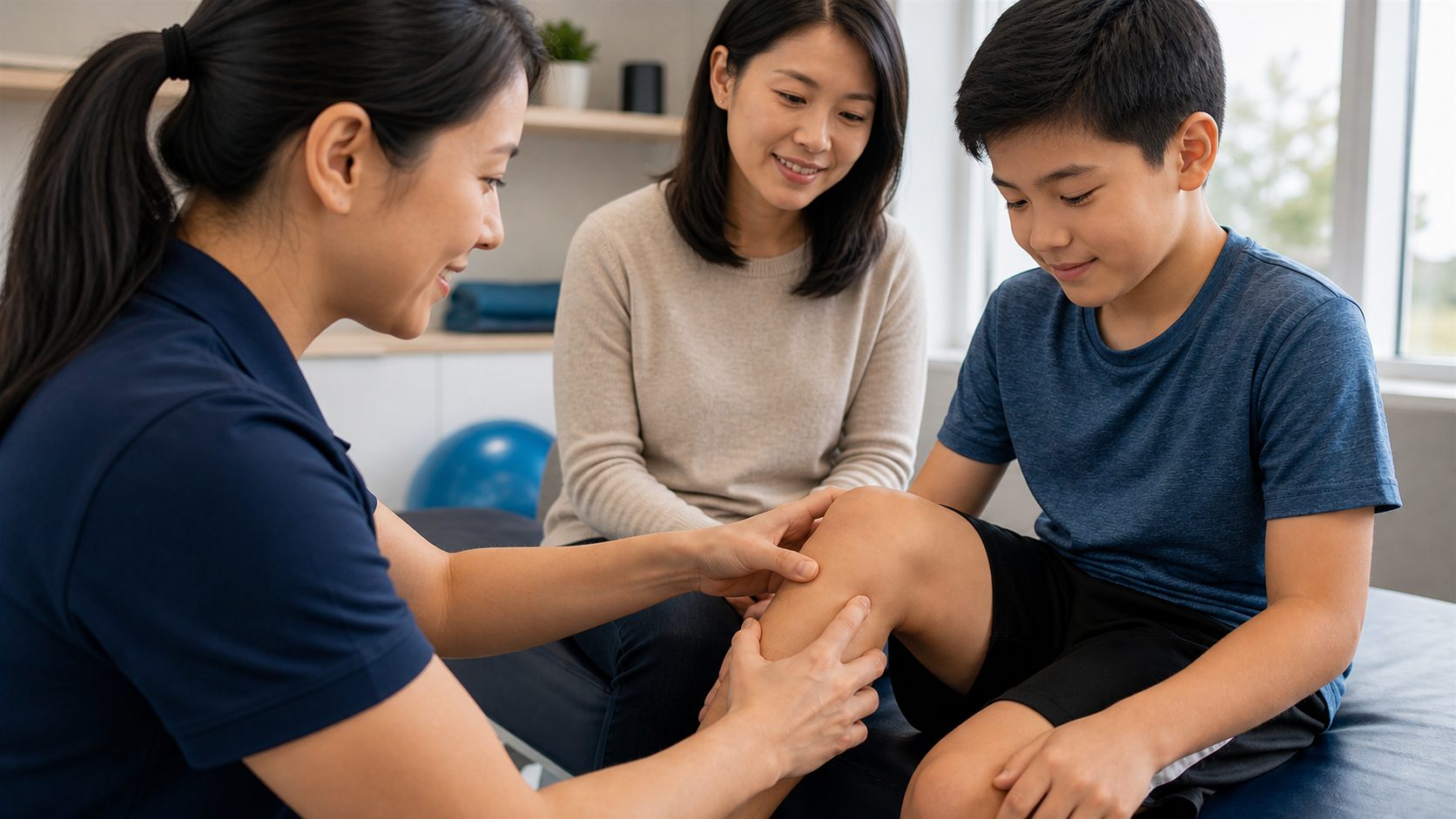
In practice, a physiotherapy session for this typically covers:
- Pain management in the early phase: taping, soft tissue release of tight muscles, icing guidance, and advice on managing training load rather than stopping sport outright
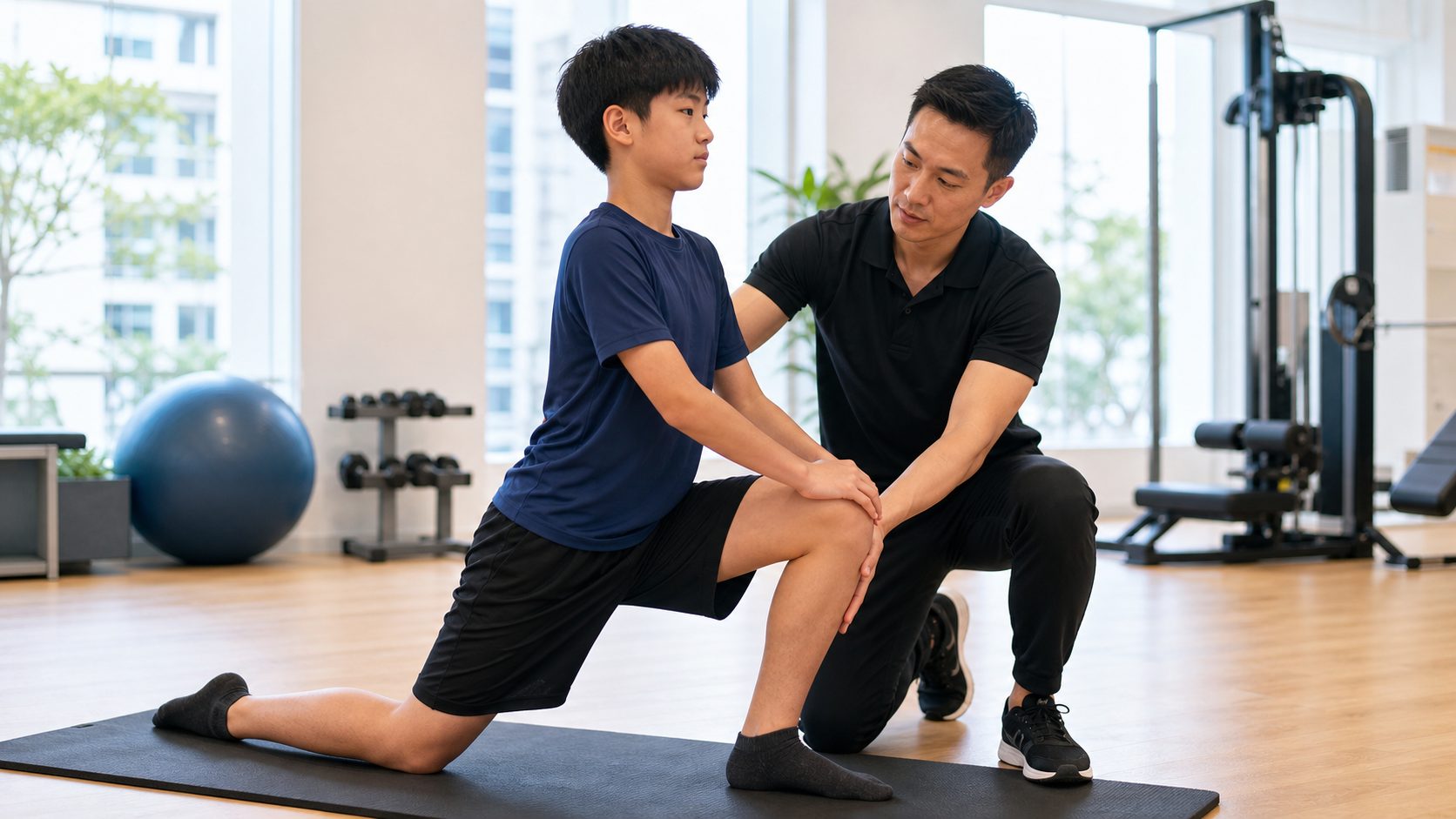
- Stretching to reduce the pull on the patellar tendon and improve flexibility
- Progressive strengthening to rebuild muscle around the knee that weakens during a rest period, so your child returns to sport without simply re-triggering the same problem
- Activity modification: relative rest from the aggravating sport, occasionally a short period of full rest if pain is severe, rather than either "push through it" or "stop everything indefinitely"
The one honest caution: pushing through pain and continuing to train at full intensity is the thing most likely to prolong this or make it worse. That's the actual risk here, not the condition itself, which resolves on its own once growth is complete, but ignoring it in the meantime.
Does My Child Need an X-Ray?
Usually not: this is typically a clinical diagnosis made by examining the knee, and imaging is reserved for cases that don't fit the usual pattern. A physiotherapist or doctor can usually identify Osgood-Schlatter from the history (a growing, active child, pain at exactly that spot, worse with the expected activities) and a physical exam showing tenderness and sometimes swelling over the tibial tuberosity. X-rays or ultrasound get used to rule out other causes when the presentation is unusual, or to check a case that isn't improving as expected, not as a routine first step for a straightforward presentation.
When Should We See a Doctor Instead of Managing at Home?
See a doctor if the pain is severe, if it's affecting one specific spot with significant swelling or warmth (rather than the general ache typical of this condition), or if rest and activity modification over a few weeks haven't made any difference at all. Those patterns suggest it's worth ruling out something else, or that the case needs closer management than home rest alone. A physiotherapist is the right first call for the straightforward, expected presentation; a doctor is the right call when something about the picture doesn't fit.
Frequently Asked Questions
Does my child have to stop playing sport completely? Not usually. Most cases are managed with reduced training load rather than a full stop. Your physiotherapist will guide how much activity is appropriate as symptoms improve.
Will this cause long-term damage? No. Osgood-Schlatter resolves once the growth plate closes, typically by the end of the teenage growth period. The bump below the kneecap can sometimes remain slightly visible into adulthood, but without ongoing pain or dysfunction.
Can it affect both knees? Yes, it can affect one or both knees, and cases affecting both are not unusual.
How long does recovery take? It varies by how early it's managed and how well training load is adjusted in the meantime. Some children improve within a couple of months of starting physiotherapy, others take longer. Your physiotherapist can give a realistic timeline once they've actually assessed your child.
Getting Your Child Back on the Field, Safely
Osgood-Schlatter disease is common, not dangerous, and responds well to the right combination of load management, stretching and strengthening. The goal is managing it properly now so your child gets back to full training without the pain becoming a longer, harder problem to fix. "Growing pains" is not a diagnosis worth settling for when there's a clear, well-supported way to actually help.
Booking Your Child's Paediatric Physiotherapy Consultation in Singapore?
If your child has ongoing knee pain during sport, our paediatric physiotherapy team can assess what's actually going on and build a plan to get them back to training safely. Book an appointment or view our locations.
Ready to feel better?
Book a consultation with our physiotherapy team for an assessment tailored to you.