
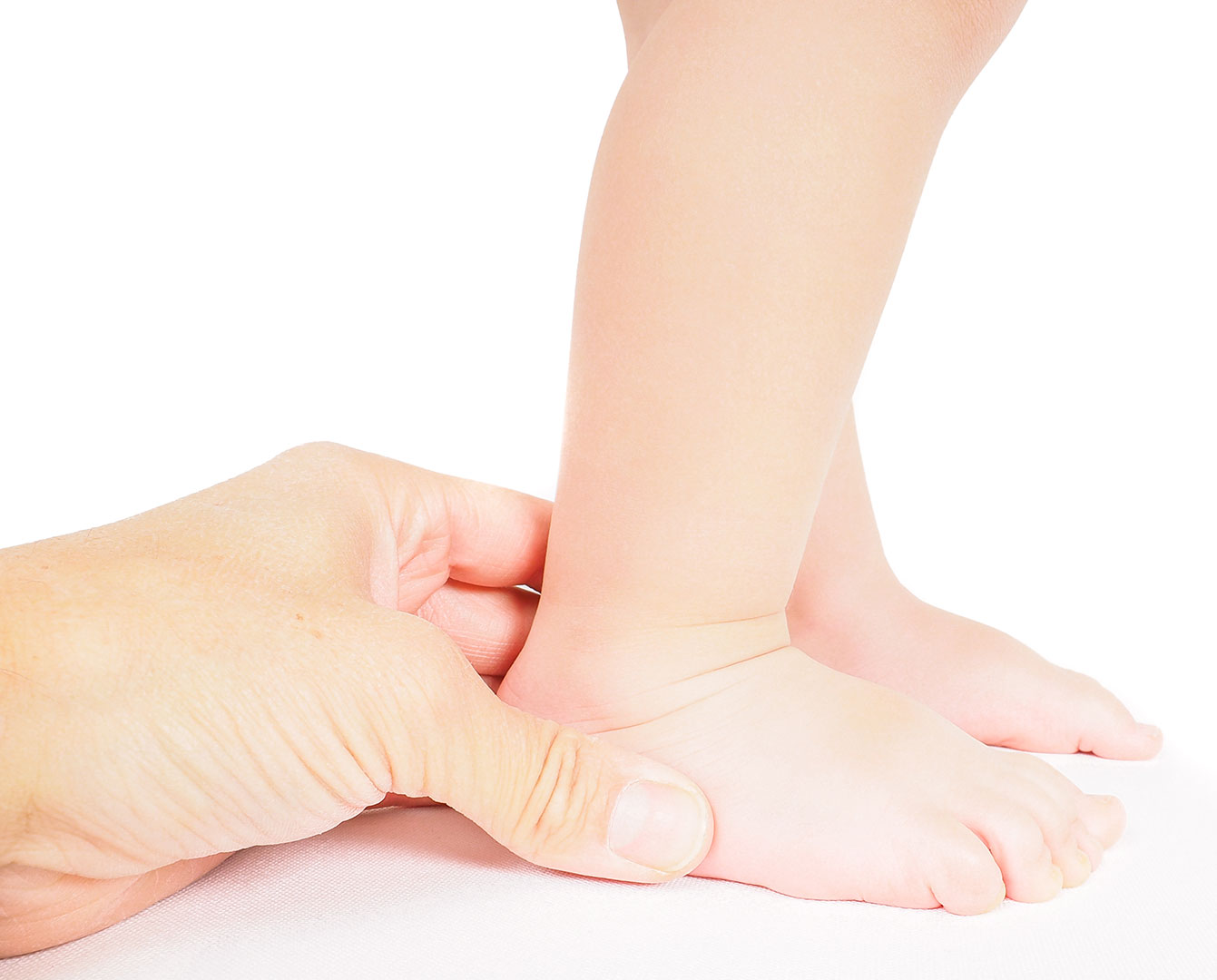
Also known as “fallen arches” or “pes planus”, this condition occurs in approximately 20-30 percent of the population. Infants’ feet do appear flat as the arch has yet to be formed due to low muscle tone and weak ligaments. There is also a fat deposit which can hide the natural curve of the arch area. This fat pad usually disappears when the child is about 2-3 years old. Having flat feet may lead to other issues later on in life if left untreated.
Common causes include the following:
Genetics
Weak arches/structures in the lower leg and foot
Injury
Signs and Symptoms
There are children with fallen arches who experience no pain or problems in their feet. Most, however, may experience pain not only in their feet but in other areas such as ankles, knees and lower back.
Some signs and symptoms a child may experience with flat feet include:
Absence of a gap between the ground and arch when standing
Heel tilting away from the midline
Rolling in at the ankle (overpronation)
Walking with toes turned outwards
Tiredness in ankles and lower legs
Pain in the shin
Difficulty standing on tiptoes
Swelling that occurs on the inside of the ankle
Pain in the arch of the foot, heel, calf, knee, hip, or lower leg area
Difficulty doing sports or exercise
Trips and falls easily
Frequent ankle sprains
These signs and symptoms may vary according to the severity of the condition.
When should I be concerned for my child?
Almost all children’s feet appear to be flat until they are 3 years old. While some children have flat feet and have no problems at any stage in life, many do suffer from ailments such as arthritis and muscle problems, which can start as early as their teenage years. This can seriously affect their quality of life.
If the answer is ‘yes’ to these questions below, you may wish to make an appointment for your child to have a thorough examination:
Is the shape of your child’s feet different looking?
Are the arches of the foot not forming after the age of 3?
Does your child walk strangely or fall often?
Does your child have pain in the feet, legs or hips?
Do you have a family history of foot problems?
How can a Podiatrist help?
Our podiatrist will conduct a thorough evaluation of your legs and feet to identify the cause. A detailed history and physical examination will be conducted. Dynamic and static assessments will include:
Hip examination
Knee examination
Ankle and foot examination
Standing and gait analysis
Footwear analysis and advice
From the findings, the podiatrist will construct a treatment plan. Depending on the severity of the condition, treatment will include the application of foot orthoses , footwear changes, and specific exercises to strengthen the ankles and feet.
Let our podiatrists help your child if he or she has flat feet.