

What is Diastasis Recti?
If your tummy still looks pregnant months after delivery, diastasis recti might be the culprit. Read on to find out more about this common postpartum condition.
Diastasis Recti is a separation of the abdominal muscles along the line of connective tissue that runs down the centre of the abdomen. This line of connective tissue is known as linea alba. During pregnancy, your uterus expands causing the abdominals to overstretch and pull apart resulting in muscle weakness and thinning of the linea alba. This band of tissue gets wider as it is pushed outwards.
Diagnosis and treatment options for diastasis recti tend to vary depending on the degree of widening. Although diastasis recti occurs primarily in pregnant and postpartum women, it can also occur in men.
Complications Arising From Diastasis Recti
Contrary to popular belief, it is never too late to repair your diastasis recti. With the proper treatment methods like diastasis recti exercises or physiotherapy for diastasis recti, you can strengthen and tighten your abdominal muscles again.
If left untreated, diastasis recti can lead to:
Increase in postpartum lower back pain
Pelvic and hip pain
Poor core muscular stabilisation of the pelvis and spine due to poor and faulty postures
Gastrointestinal problems such as bloating and constipation
Abdominal hernias, abnormal organ or tissue protrusion, such as the bowel, through the cavity wall in which it usually resides
What Are The Risk Factors for Diastasis Recti
Diastasis recti in men can be caused by poor form during exercise. A common exercise that can lead to diastasis recti would be weightlifting as it places too much pressure on the abdominal wall.
Newborns can also be born with abdominal diastasis. It is more common in premature babies and will usually resolve with time. Most of the time it does not require treatment
For pregnant women, diastasis in the third trimester is inevitable as the uterus naturally stretches to allow for the rapid growth of the baby. This in turn initiates a separation of the rectus abdominis and linea to accommodate the growing baby. This separation usually heals by itself in 8-12 weeks. For many new mums, however, the gap can persist. This is because the connective tissues are no longer providing tension and stability, resulting in compromised abdominal muscles. This lack of protection and stability affects the whole body both aesthetically and functionally
How To Check For Diastasis Recti?
Most often, diastasis recti or abdominal separation can be seen with a protruding dome down the length of the tummy, particularly around the belly button. You may notice this in everyday movement, such as when getting up or lying down in bed.
A simple self-test at home can help you determine if you have diastasis recti. Simply follow the steps below:
Lie on your back with your knees bent and place the soles of your feet flat on the floor.
Place one hand behind your head and the other on your abdomen. The fingertips of the hand on your abdomen should be spread across your midline. Ensure that it is parallel to your waistline at the level of your belly button.
Relax your abdominal muscles and gently press your fingertips into your abdomen.
Roll your upper body off the floor into a “crunch” position.
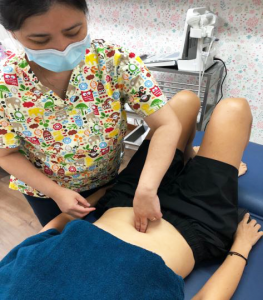
Move your fingertips back and forth across your midline, feeling for the right and left side of your abdominal muscles. From there, you can use your fingers to feel for a gap between the abs and see how many fingers can fit in the gap between your right and left abdominals. Most likely you are suffering from diastasis recti if you have more than a two-finger gap between your abdominal muscles.
Diastasis Recti Treatment
It is possible to heal your diastasis recti and flatten their abdominal walls with proper rehabilitation exercises. However, it is recommended to work with a healthcare professional before starting on exercises for diastasis recti. A physiotherapist from WACC will be able to assess the severity of your condition and may recommend physiotherapy for diastasis recti. Physiotherapy is a very effective way to manage diastasis recti. Engaging the help of a physiotherapist from WACC can help improve your condition through:
Educating on modification of postures and daily activities if required. We can also assist with determining a program for safe and effective return to activities
Breathing techniques
Postural Awareness
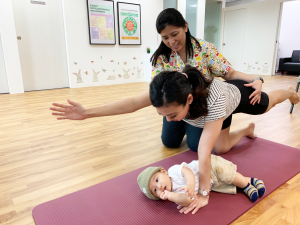
Exercise Training: It is important to engage your deep abdominal and pelvic floor muscles correctly and in the appropriate positions. Any muscle imbalances will also be addressed
All our physiotherapists are trained in the management of diastasis recti, and thus can help assess as well as provide a treatment plan specific to your needs and condition.
Frequently Asked Questions About Diastasis Recti
Can Diastasis Recti Be Treated Without Surgery?
There are many conservative treatment options for diastasis recti such as exercises and physiotherapy. In some rare cases, surgery is recommended if there is no improvement after conservative treatment and your condition is affecting your daily function Surgery is also performed in severe cases of hernia, or if the patient opt for it.
How Long Does It Take For My Diastasis Recti To Heal?
The amount of time it takes for your diastasis recti to heal is dependent on the severity of your abs separation and the consistency in which you do your prescribed diastasis recti exercises. Most of the time, diastasis recti improves after several weeks into postpartum as your muscles start regaining strength.
We recommend speaking with one of our physical therapists at WACC to find out the lifestyle modifications and diastasis recti exercises that you can do to improve your condition.
Is Diastasis Recti A Recurring Condition?
While diastasis recti can heal on its own, your risk for diastasis recti recurrence increases in your subsequent pregnancies. This happens as your linea alba is continuously stretched, resulting in it losing its elasticity. Hence, the linea alba may not regain its original shape or form after having been stretched multiple times.
However, exercises, physiotherapy for diastasis recti, as well as maintaining a good posture can help reduce the severity of your condition.
Diastasis recti can give off the impression that you are pregnant, even after your baby is born.. As such, it is advisable to discuss your concerns and symptoms with your healthcare provider so that they can diagnose and provide you treatment options. Getting treatment for your diastasis recti can help relieve the pain you are experiencing and make you feel more confident with your body.