
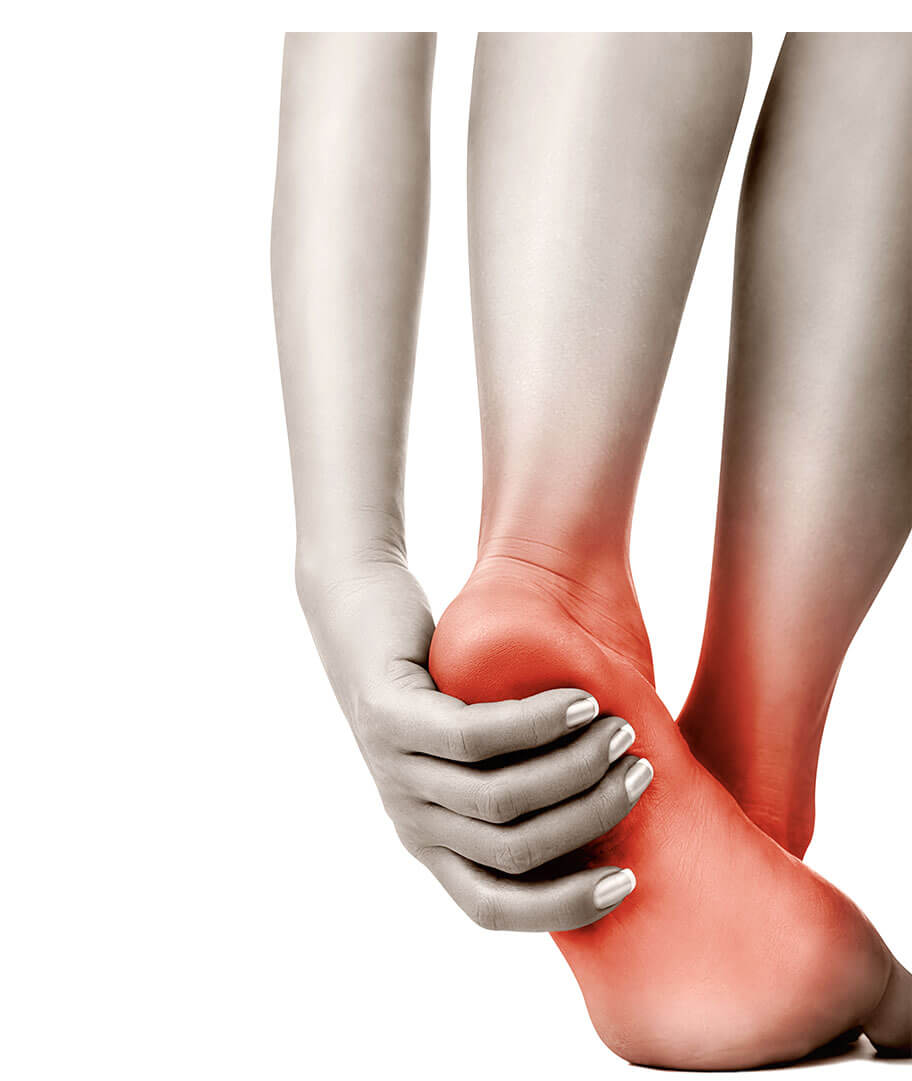
Heel pain commonly occurs in young children due to their activity levels and not having a fully developed musculoskeletal structure.
Causes
The cause of heel pain is often multifactorial. The factors that can contribute to the development of heel pain include:
Overuse
Tight muscles/tendons in the legs
Gait abnormalities (overpronation or oversupination)
Ill-fitting, unsupportive or worn out shoes
Wearing inappropriate footwear (e.g. not wearing the right type of football boots with relevant studs on various football surfaces)
Sudden increase in activity levels
Lack of appropriate training or conditioning for sports
Injury to the heel
Obesity
These are the conditions commonly associated with heel pain:
| Location | Conditions | Signs and Symptoms |
|---|---|---|
| Pain below the heel |
Plantar Fasciitis with or without heel spur
|
|
| Pain behind the heel |
Insertional Achilles tendonitis
|
|
| Pain behind the heel |
Sever’s Disease
|
|
It is important to treat heel pain in children early to prevent worsening of symptoms or further injury.
How can a Podiatrist help?
Women and Children Centre can offer a comprehensive, non-invasive treatment for heel pain. Depending on our podiatrists’ clinical assessment of your child’s condition, we can apply various treatment modalities to manage heel pain. Dedicated to helping patients recover, our podiatrists will also take time to educate patients and parents on the cause of their symptoms and how to manage and prevent progression or recurrence.
Our podiatrists are highly experienced and we will derive an accurate diagnosis and treat accordingly. Dynamic and static assessments will include:
Hip examination
Knee examination
Ankle and foot examination
Standing and gait analysis
Footwear analysis and advice
Depending on the findings, the podiatrist will be able to construct a treatment plan, which will vary according to each child and it may require several months for the symptoms to be completely resolved. Treatment may include the application of shockwave therapy, manual therapy, sports taping, foot orthoses, heel raises, footwear changes, or exercises and modification of activity.
Let our podiatrists help relieve your child’s heel pain!