


Ingrown toenails are common during pregnancy due to swelling. Here's why they happen, and how non-invasive treatment actually works.
Your feet have been swollen for weeks and your usual shoes stopped fitting a while ago. Worse still, your big toe is sharply painful on one side, and it's not the general achy swelling you've gotten used to. It's a fair question to have: is this just pregnancy doing what pregnancy does, or is it something that actually needs treating, and if it does, is treatment even safe right now? The short version: it's very likely an ingrown toenail, it's fairly common during pregnancy, and in most cases you don't need anything invasive.
Why Are Ingrown Toenails More Common During Pregnancy?
It comes down to pressure: pregnancy causes lower-limb swelling, and swollen toes sitting inside shoes that no longer fit properly put extra pressure on the nail edges. Our own service page notes that ingrown toenails are "a common problem during and post pregnancy due to the increase in lower limb swelling." HealthHub's guidance on pregnancy confirms the underlying swelling is common, describing "swelling in your ankles, feet, fingers, wrists and face, especially towards the end of the pregnancy," and recommends wearing flat shoes and sitting with your feet raised where possible.
Separately, HealthHub's guidance on ingrown toenails lists "improper footwear (too tight or loose)" and "repetitive pressure on feet" among the common risk factors. Put those two facts together, swollen feet plus shoes that no longer fit the way they did, and it's easy to see why this shows up so often during pregnancy.
- Pain, redness, and swelling concentrated at one edge of a toenail, usually the big toe
- Worse in shoes that fit fine earlier in pregnancy but feel tight now
- Can happen during pregnancy or in the weeks after delivery, while swelling is still settling
Is It Just Swelling, or Is It an Ingrown Toenail?
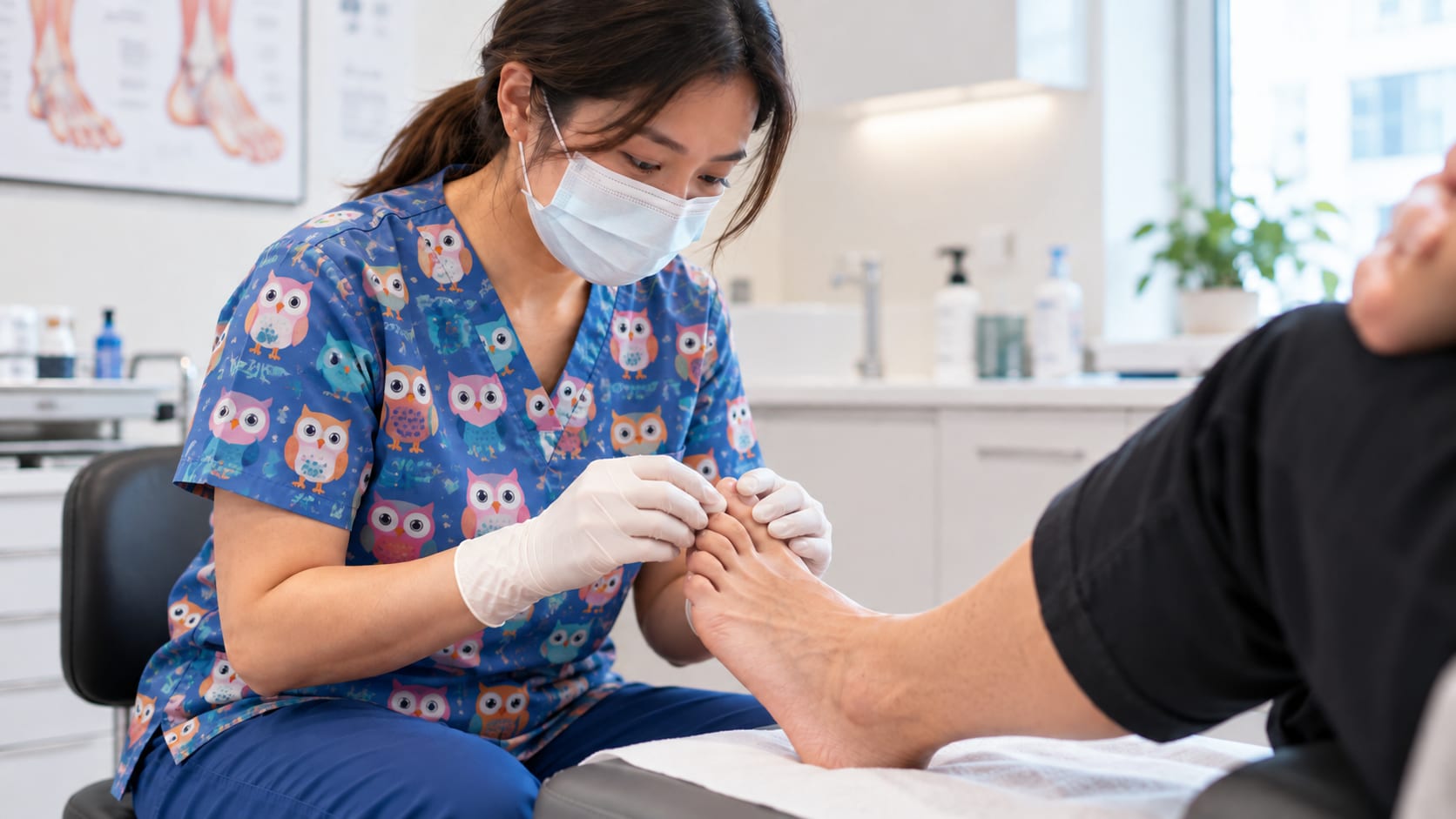
General pregnancy swelling is diffuse and usually doesn't hurt in one specific spot; an ingrown toenail is localised, sharp, and sits right at the edge of the nail. If your whole foot feels puffy but nothing hurts more than anything else, that's ordinary swelling. If one particular spot next to a toenail is red, tender to touch, and painful specifically there rather than generally, that's worth having looked at.
What Does Non-Invasive Treatment Actually Involve?
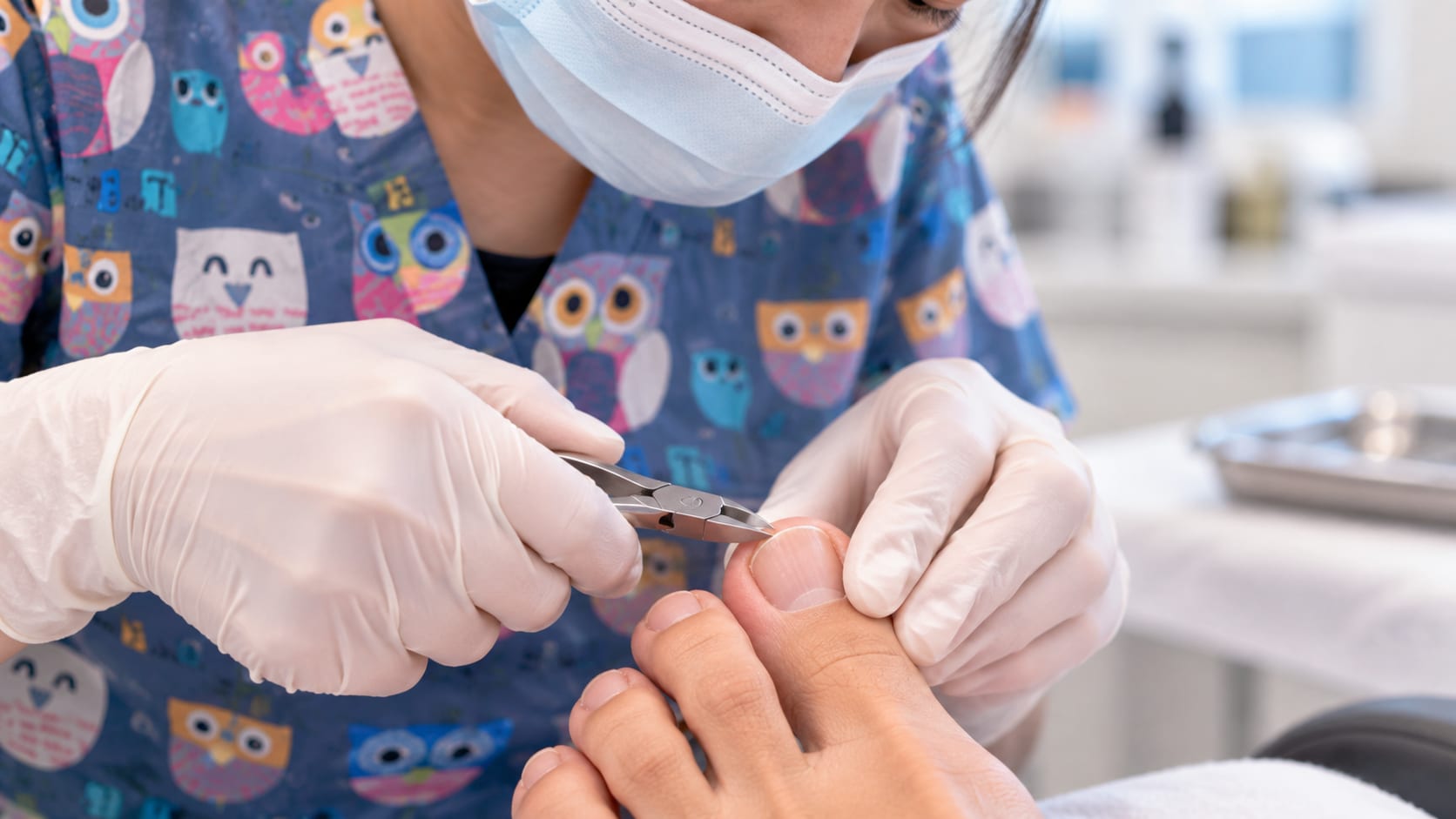
For most cases, treatment is genuinely simple: careful removal of the offending nail spike, or ongoing conservative care through proper trimming and packing, not a procedure. Our service page describes two approaches: a podiatrist can "carefully and effectively remove the offending nail spike with as minimal pain as possible using special nail clippers" for fairly instant relief, or manage it conservatively through "regular trimming and filing of the nails and applying cotton packing on the nail borders," alongside guidance on nail care going forward to reduce recurrence.
HealthHub's general advice on ingrown toenails lines up with this for mild cases too: "proper nail trimming, footwear and foot hygiene may suffice." The professional-care distinction is worth making plainly: a podiatry visit is not the same as a pedicure. Our service page explains that podiatrists use sterilised, specialised medical instruments when removing ingrown toenails "to minimise risk of infection."
- Nail spike removal with special clippers, for quick relief
- Regular professional trimming and filing to prevent recurrence
- Cotton packing along the nail border to redirect how the nail grows
- Use of a nail brace to reduce ingrown toenail curvature
- Guidance on footwear and ongoing nail care
When Does It Need More Than Conservative Care?
Most cases settle with conservative management, but a minority need more, and it's worth knowing the signs. HealthHub's general guidance is direct: for more severe cases, "a simple surgical procedure to remove the ingrown nail edge may be performed under local anaesthesia," and where infection has set in, "oral antibiotics may be required." If pain, redness or swelling is getting worse rather than better despite proper care, or there's any sign of spreading infection, that's the point to get it reassessed rather than keep managing it at home.
One more thing worth knowing, not to alarm anyone but because HealthHub says it plainly: persistent nail changes that don't fit the usual pattern are worth having checked by a doctor early, partly to rule out rarer causes of nail discolouration. That's a general piece of advice, not something specific to pregnancy, but it's a reasonable one to keep in mind if anything about a nail looks genuinely unusual rather than just inflamed.
If treatment ever needs to move beyond conservative podiatry care while you're pregnant, whether that's a procedure under local anaesthesia or antibiotics, that's a conversation to have with your obstetrician as well as your podiatrist.
Frequently Asked Questions
- Will an ingrown toenail go away after I deliver, once the swelling goes down?
Sometimes the underlying pressure eases as swelling resolves, but an ingrown toenail that's already developed usually still needs proper trimming or nail care to fully settle, rather than resolving on its own. - Is it safe to see a podiatrist while I'm pregnant?
Conservative, non-invasive care like trimming and packing is a standard part of podiatry practice. If your case needs more than that, your podiatrist and obstetrician would coordinate on what's appropriate for your stage of pregnancy. - Can I just treat it myself at home?
Careful trimming and comfortable footwear can help mild cases, but professional care reduces the risk of infection and recurrence, particularly with swollen feet making home care harder to do accurately yourself. - Why does one shoe suddenly feel too tight when it fit fine last month?
Pregnancy swelling genuinely changes foot size and shape, especially later in pregnancy, so footwear that fit earlier can start putting pressure in places it didn't before. - Do I need a referral to see a podiatrist?
Not for most services at a private clinic. Some insurers require a referral before approving a claim, so check your policy if you intend to claim.
Comfortable Feet, Through the Swelling and After
Ingrown toenails during pregnancy are common, genuinely treatable, and rarely need anything invasive. Most of what actually helps is straightforward: careful nail care, better-fitting footwear as your feet change, and getting it looked at properly rather than trying to manage sharp, localised pain yourself with swollen feet.
Booking Your Podiatry Consultation in Singapore?
If you're dealing with toe pain during or after pregnancy, our podiatry team can assess whether it's an ingrown toenail and treat it without surgery in most cases. Read more about our non-invasive ingrown toenail treatment, book an appointment or view our locations.
Ready to feel better?
Book a consultation with our podiatry team for an assessment tailored to you.